
- World
- Jan 22
UNHCR warns of climate refugee crisis
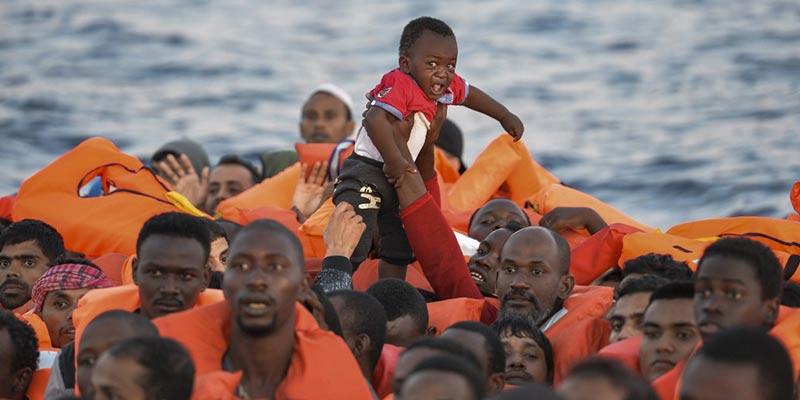
The world needs to prepare for millions of people being driven from their homes by the impact of climate change, said the United Nations High Commissioner for Refugees.
Speaking at the World Economic Forum, Filippo Grandi said a UN ruling this week meant those fleeing as a result of climate change deserved international protection, and that it had broad implications for governments.
The UN Human Rights Committee made the landmark ruling on January 20 in relation to Ioane Teitiota, from the Pacific nation of Kiribati, who brought a case against New Zealand after his asylum claim was denied.
“The ruling says if you have an immediate threat to your life due to climate change, due to the climate emergency, and if you cross the border and go to another country, you should not be sent back, because you would be at risk of your life, just like in a war or in a situation of persecution,” Grandi said.
“We must be prepared for a large surge of people moving against their will,” he said. “I wouldn’t venture to talk about specific numbers, it’s too speculative, but certainly we are talking about millions here.”
Potential drivers include wildfires like those seen in Australia, rising sea levels affecting low-lying islands, the destruction of crops and livestock in sub-Saharan Africa and floods worldwide, not least in parts of the developed world.
Whereas for most of its 70 years UNHCR - the UN’s refugee agency - has worked to assist those fleeing poorer countries as a result of conflict, climate change is more indiscriminate.
“It is further proof that refugee movements and the broader issue of migration of populations is a global challenge that cannot be confined to a few countries,” said Grandi.
70 mn people displaced
Yet the convention relating to the status of refugees, signed in 1951, made no provision for climate change as a reason for people to flee their country and seek asylum elsewhere. As climate impacts grow, legal questions become more complicated.
UNHCR, whose budget has risen from $1 billion a year in the 1990s to $8.6 billion in 2019 as conflicts in Iraq, Afghanistan and Syria have forced civilians to flee, now assists more than 70 million forcibly displaced people.
Turkey is the largest recipient, with more than 4 million refugees and asylum seekers, the vast majority from Syria. That has strained Turkey’s public finances and led President Tayyip Erdogan to demand more assistance from Europe.
Last November, Erdogan threatened to open the door for Syrian refugees to head to Europe unless the EU stepped up, and he is now calling for the “resettlement” of up to 1 million Syrians in the north of their homeland.
Landmark UN ruling
Governments need to take into account the climate crisis when considering the deportation of asylum seekers, the UN said in a landmark ruling that could pave the way for future climate refugees.
The committee upheld New Zealand’s decision to deport Teitiota, saying he did not face an immediate risk if returned, but it agreed that environmental degradation and climate change are some of the most pressing threats to the right to life.
“Without robust national and international efforts, the effects of climate change in receiving states may expose individuals to a violation of their rights,” the committee said.
This would trigger non-refoulement obligations which forbid a country form returning asylum seekers to a country in which they would likely be in danger.
The committee added that the risk of an entire country becoming submerged under water was so extreme that a life with dignity may not be possible even before this happened.
The low-lying South Pacific island nation of Kiribati has a population of more than 110,000, but its average height of 2 metres above sea level makes it one of the countries most vulnerable to rising seawater and other climate change effects.
New Zealand and Australia, the two most developed countries in the South Pacific, have resisted calls to change immigration rules in favour of Pacific people displaced by climate change.
The UN ruling is not binding but could open the door for future climate change asylum seekers, asylum advocates said.
“The decision sets a global precedent,” said Kate Schuetze, Pacific Researcher at Amnesty International. “It says a state will be in breach of its human rights obligations if it returns someone to a country where - due to the climate crisis - their life is at risk, or in danger of cruel, inhuman or degrading treatment.”
Manorama Yearbook app is now available on Google Play Store and iOS App Store