
- World
- Nov 01
UN COP26 begins in Glasgow
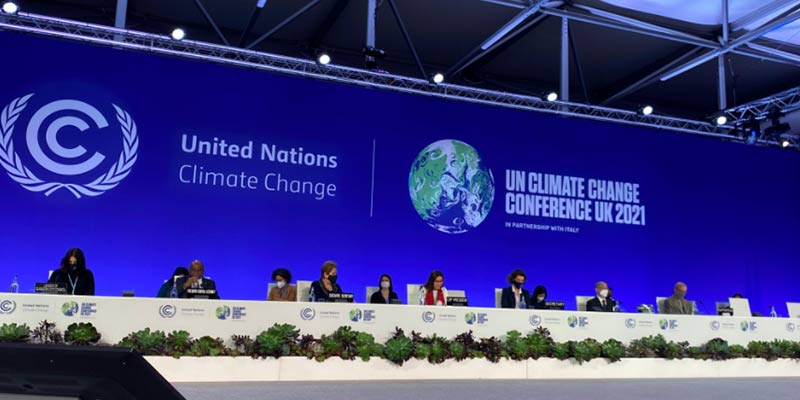
Following a series of reports and studies warning that urgent action is needed to keep the Paris Agreement’s goal of limiting global average temperature increases to 1.5°C within reach, the United Nations Climate Change Conference opened on October 31 in Glasgow with the key aims of raising ambition on all fronts and finalising the agreement’s implementation guidelines.
What is COP26?
For nearly three decades the UN has been bringing together almost every country on Earth for global climate summits – called COPs – which stands for ‘Conference of the Parties’. In that time climate change has gone from being a fringe issue to a global priority. This is the 26th annual summit – giving it the name COP26. With the UK as President, COP26 takes place in Glasgow.
Having been postponed by a year owing to COVID-19 and having to address items from COP25 held in 2019, COP26 has a huge agenda beyond the key aims.
Climate Action undertaken by a diversity of stakeholders working to support the implementation of the Paris Agreement will be showcased throughout COP26.
The World Leaders Summit provides all heads of State or government with the opportunity to set the stage for COP26.
Challenges for COP26
Greater ambition is required to achieve progress on all elements of the climate change agenda, including reducing emissions, moving adaptation to the centre of the agenda, addressing loss and damage from extreme climatic events and increasing the provision of support to developing countries.
A central issue is the provision of support to developing countries, especially in relation to the goal of mobilising $100 billion annually by 2020. Financial support is crucial for all elements of the climate change regime, including mitigation, but also in terms of adaptation, capacity-building, technology transfer and several other elements. Many Parties, especially developing countries, feel that in order to advance towards full implementation of the Paris Agreement, previous commitments should first be honoured.
Finalising the Paris Agreement’s implementation guidelines will enable the full implementation of all provisions, which will unleash more ambitious climate actions by all its Parties. Specifically, the outstanding guidelines relate to the details around the global goal on adaptation, how to report climate action and support transparently, and the use of market-based mechanisms and non-market approaches.
Why does limiting temperature rise to 1.5°C matter?
• At 2°C of global warming, there would be widespread and severe impacts on people and nature. A third of the world’s population would be regularly exposed to severe heat, leading to health problems and more heat-related deaths.
• Almost all warm water coral reefs would be destroyed, and the Arctic sea ice would melt entirely at least one summer per decade, with devastating impacts on the wildlife and communities they support.
• We cannot rule out the possibility that irreversible loss of ice sheets in Greenland and the Antarctic could be triggered, leading to several metres of sea level rise over centuries to come.
• At 1.5°C, the impacts would be serious, but less severe. There would be lower risks of food and water shortages, lower risks to economic growth and fewer species at risk of extinction.
• Threats to human health from air pollution, disease, malnutrition and exposure to extreme heat would also be lower.
• That is why every fraction of a degree of warming matters, and why we are dedicated to keeping the prospect of holding temperature rises to 1.5°C alive.
Manorama Yearbook app is now available on Google Play Store and iOS App Store