
- World
- Nov 21
More than 40 crore children globally live in poverty, shows UNICEF report
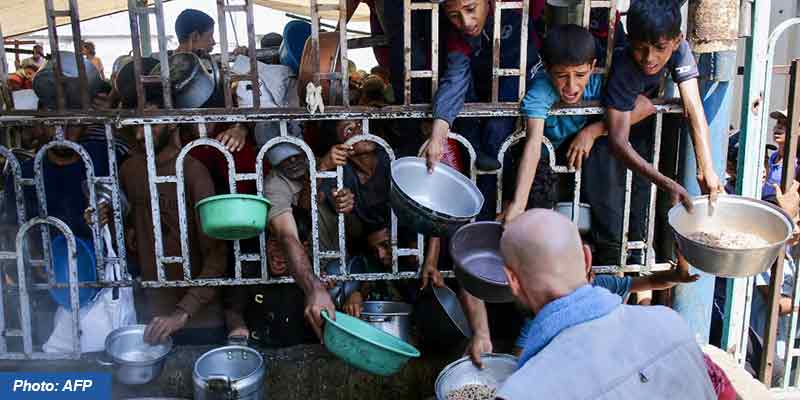
• More than one in 5 children in low and middle-income countries — or 417 million — are severely deprived in at least two vital areas critical for their health, development, and wellbeing, according to UNICEF’s flagship report issued on World Children’s Day on November 20.
• The report comes at a time when many governments around the world are scaling back foreign assistance.
• Cuts in development aid could result in the deaths of 4.5 million children under the age of five by 2030, according to The Lancet.
• At the same time, recent UNICEF estimates show the cuts could leave six million more children out of school by next year.
• ‘The State of the World’s Children 2025: Ending Child Poverty – Our Shared Imperative’ draws on data from over 130 low and middle-income countries to assess the breadth of multidimensional poverty by measuring deprivations across six categories:
i) Education
ii) Health
iii) Housing
iv) Nutrition
v) Sanitation
vi) Water.
• The analysis shows that 118 million children experience three or more deprivations, and 17 million face four or more deprivations.
• The highest rates of multidimensional poverty among children are concentrated in Sub-Saharan Africa and South Asia.
• In Chad, for example, 64 per cent of children face two or more severe deprivations, and just under 25 per cent face three or more.
• Sanitation is the most widespread severe deprivation, with 65 per cent of children lacking access to a toilet in low-income countries, 26 per cent in lower-middle income countries, and 11 per cent in upper-middle income countries.
• A lack of adequate sanitation can increase children’s exposure to diseases.
• The share of children facing one or more severe deprivations in low-and-middle-income countries dropped from 51 per cent in 2013 to 41 per cent in 2023, largely due to prioritising child rights in national policies and economic planning.
• However, progress is stalling. Conflict, climate and environmental crises, demographic shifts, mounting national debt and widening technological divides are compounding poverty.
• At the same time, unprecedented cuts to Official Development Assistance (ODA) risk deepening child deprivation across low- and middle-income countries.
• Yet progress towards ending child poverty is possible.
• For example, Tanzania achieved a 46-percentage point reduction in multidimensional child poverty between 2000 and 2023, partially driven by government cash support grants, and empowering poor households to make their own financial decisions.
• While in Bangladesh, child poverty dropped by 32-percentage points over the same period, thanks to government-led initiatives that increased education and electricity access, improved housing quality, and investment in water and sanitation services that reduced open defecation from 17 per cent in 2000 to zero in 2022.
• Poverty undermines children’s health, development, and learning – leading to weaker job prospects, shorter lifespans, and increased rates of depression and anxiety.
• The report highlights that the youngest children, those with disabilities, and those living in crises are particularly vulnerable.
Monetary poverty
• According to the latest data, more than 19 per cent of children globally live in extreme monetary poverty, surviving on less than $3 per day. Nearly 90 per cent of these children are in Sub-Saharan Africa and South Asia.
• The report includes an analysis on 37 high-income countries, showing that about 50 million children — or 23 per cent of the child population in these countries — live in relative monetary poverty, meaning their household has significantly less income than most others in their country, potentially limiting their ability to participate fully in everyday life.
• While poverty declined, on average, by 2.5 per cent across the 37 countries between 2013 and 2023 — progress has stagnated or reversed in many cases.
• In France, Switzerland, and the United Kingdom, for example, child poverty increased by over 20 per cent. During the same period, Slovenia reduced its poverty rate by more than a quarter, largely thanks to a strong family benefits system and minimum wage legislation.
How to reduce child poverty?
The report highlights that ending child poverty is achievable, and underscores the importance of centering child rights, as outlined in the UN Convention on the Rights of the Child, in all government strategies, policies and actions aimed at poverty reduction, by:
i) Making ending child poverty a national priority.
ii) Integrating children’s needs into economic policies and budgets.
iii) Providing social protection programmes, including cash support to families.
iv) Expanding access to essential public services, such as education, healthcare, water, sanitation, nutrition, and housing.
v) Promoting decent work for parents and caregivers to strengthen their economic security, which is closely linked to children’s progress.