
- World
- Jan 19
80th anniversary of first UN General Assembly meeting
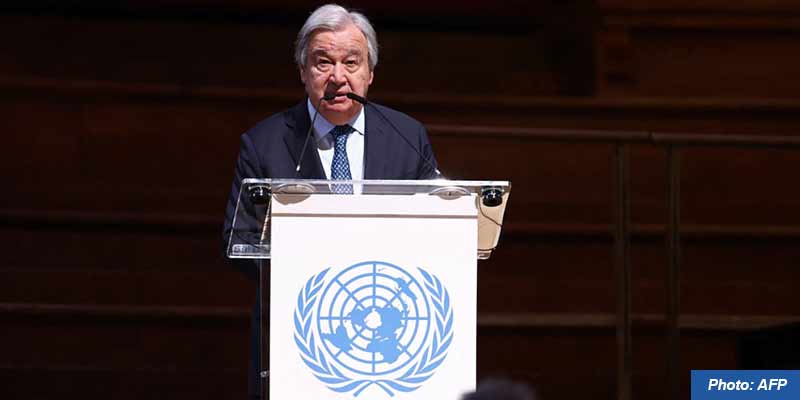
• UN Secretary-General Antonio Guterres participated in a special event in London on January 17 to mark the 80th anniversary of the first meeting of the General Assembly, held in the UK capital in 1946.
• He delivered the keynote address at the United Nations Association of the United Kingdom (UNA-UK) conference at Methodist Central Hall in Westminster, London where the first General Assembly meeting was held on January 10, 1946.
• The first General Assembly took place within the same walls four months after the end of the Second World War, in a heavily bombed London where tens of thousands had been killed.
• In the 80 years since the first General Assembly, the UN has expanded from 51 members to 193.
• The event also marked the 80th anniversary of the first UN Security Council, which took place on January 17, 1946 at nearby Church House.
• Over 1,000 delegates from across the world gathered for the event.
UN General Assembly (UNGA)
• The General Assembly is the UN’s most representative body, comprising all 193 Member States.
• Established in 1945 under the Charter of the United Nations, the General Assembly is the main policy-making organ of the Organisation.
• It provides a unique forum for multilateral discussion of the full spectrum of international issues covered by the Charter.
• It also plays a central role in the process of standard-setting and the codification of international law.
• The Assembly meets from September to December each year (main part), and thereafter, from January to September (resumed part), as required.
• In addition to its regular sessions, the Assembly may meet in special and emergency special sessions.
• Each of the 193 Member States in the Assembly has one vote. Votes taken on designated important issues – such as recommendations on peace and security, the election of Security Council and Economic and Social Council members, and budgetary questions – require a two-thirds majority of Member States, but other questions are decided by a simple majority.
Functions and powers of the General Assembly:
According to the Charter of the United Nations, the General Assembly may:
• Consider and approve the United Nations budget and establish the financial assessments of Member States.
• Elect the non-permanent members of the Security Council and the members of other United Nations councils and organs and, on the recommendation of the Security Council, appoint the Secretary-General.
• Consider and make recommendations on the general principles of cooperation for maintaining international peace and security, including disarmament.
• Discuss any question relating to international peace and security and, except where a dispute or situation is currently being discussed by the Security Council, make recommendations on it.
• Discuss, with the same exception, and make recommendations on any questions within the scope of the Charter or affecting the powers and functions of any organ of the United Nations.
• Initiate studies and make recommendations to promote international political cooperation, the development and codification of international law, the realisation of human rights and fundamental freedoms, and international collaboration in the economic, social, humanitarian, cultural, educational and health fields.
• Make recommendations for the peaceful settlement of any situation that might impair friendly relations among countries.
• Consider reports from the Security Council and other United Nations organs.