
- World
- Mar 06
- Sreesha V.M
European Council adopts 2040 climate target
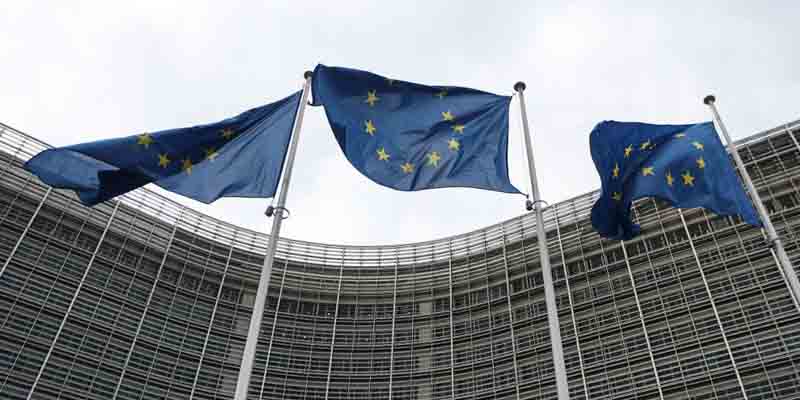
• The European Council formally adopted the amended European Climate Law, introducing a binding intermediate climate target for 2040, of a 90 per cent reduction in net greenhouse gas (GHG) emissions compared to 1990 levels.
• This new target strengthens the European Union’s path towards achieving climate neutrality by 2050 across all sectors of the economy.
• This adoption marks the final step in the legislative process.
European Climate Law
• First adopted in 2021, the European Climate Law provides the legal foundation for the EU’s long-term climate policies, in line with the Paris agreement.
• It set a binding economy-wide target of climate neutrality by 2050 and a 2030 objective of reducing net emissions by at least 55 per cent.
• It also provided for the establishment of an intermediate climate target for 2040.
• After publishing the communication ‘Europe’s 2040 climate target’ in February 2024, the European Commission formally proposed the new climate target on July 2, 2025 through an amendment of the European Climate Law.
• In October 2025, the European Council provided strategic guidance on the way forward on the framework for establishing a target for 2040.
• In particular, EU leaders emphasised the need for a balanced approach that would preserve and boost the EU’s competitiveness, while ensuring a socially fair transition.
• They also called on the Commission to strengthen the supporting framework for European industry and citizens in achieving the 2040 target.
• In November 2025, Member States agreed on a general approach in the Environment Council to a legally binding headline 2040 target of 90 per cent with a domestic target of 85 per cent and up to 5 per cent of international carbon credits.
• The 2040 climate target will reaffirm the EU’s determination to tackle climate change and will shape our path after 2030, to ensure the EU reaches climate neutrality by 2050.
• The climate neutrality objective is at the heart of the European Green Deal, and is a legally binding objective set out in the Climate Law.
• The 2040 climate target provides predictability and stability for investments in the clean energy transition in Europe.
• It will drive competitiveness and innovation, create more jobs and growth and strengthen the EU’s economic and energy security.
The next steps
• The European Commission will make relevant proposals to implement the binding EU 2040 climate target.
• The amended regulation also provides for a review of the European Climate Law every two years.
• Based on science and technological developments, the Commission will assess the climate law taking into account EU competitiveness, energy prices, net removals at EU level, and the flexibility for EU countries to use high-quality international credits to meet their post-2030 targets.
• The Commission will propose revisions to the climate law or additional measures where needed to support competitiveness and long-term prosperity.
• From 2036 onwards, high-quality international credits may be used up to a limit of 5 per cent of 1990 EU net emissions to make an adequate contribution towards the 2040 target in a way that is both ambitious and cost-efficient.
• This means that at least 85 per cent of emissions reductions must be achieved within the EU.
• Credits must be based on credible activities of GHG reduction in partner countries, in line with the Paris agreement.
(The author is a trainer for Civil Services aspirants.)