
- World
- May 16
- Sreesha V.M
Scientists unearth Southeast Asia’s largest dinosaur in Thailand
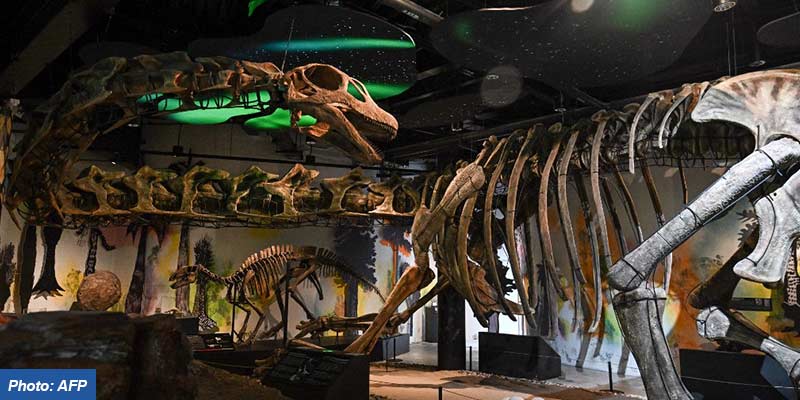
• Scientists announced the discovery of a new type of long-necked plant-eating dinosaur – the largest ever found in Southeast Asia.
• The dinosaur, described in a new paper in the journal Scientific Reports, was identified from bones found at the edge of a pond in north-eastern Thailand 10 years ago.
• This has been revealed in a study led by researchers at University College London (UCL), Mahasarakham University, Suranaree University of Technology and Sirindhorn Museum in Thailand.
• It has been named Nagatitan chaiyaphumensis, with “Naga” referring to a mythological aquatic serpent in Thai and Southeast Asian folklore, “Titan” referring to the giants of Greek mythology and chaiyaphumensis meaning “from Chaiyaphum”, the Thai province where the fossils were discovered.
• Analysing spine, rib, pelvis and leg bones, including a front leg bone 1.78 metres long (as long as a human), the research team estimated that the dinosaur would have weighed 27 tonnes — about the same as nine adult Asian elephants — and measured 27 metres in length.
• It is the 14th dinosaur to be named in Thailand.
• It belonged to the sauropod family of dinosaurs — long-necked, long-tailed plant-eaters that included the Diplodocus and Brontosaurus — and lived in the Early Cretaceous period between 100 and 120 million years ago.
• Nagatitan was a somphospondylan sauropod – a subgroup of sauropod.
• The researchers found that it specifically belonged to a narrower group within the somphospondylans called Euhelopodidae, which represents a group of somphospondylan sauropods only found in Asia.
(The author is a trainer for Civil Services aspirants.)