
- World
- Jun 15
UK announces social media ban for under-16s
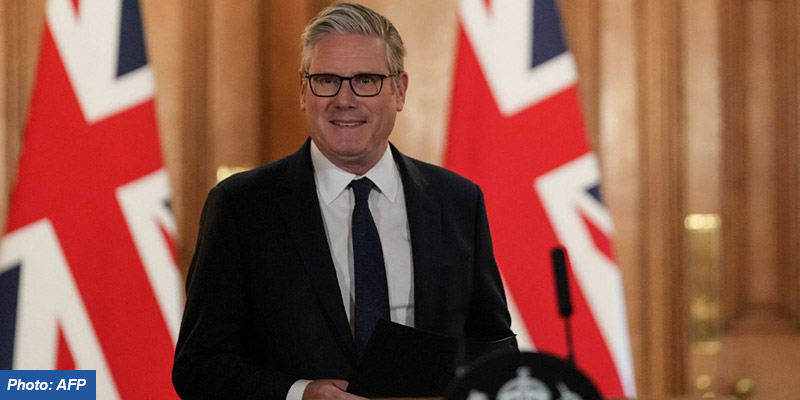
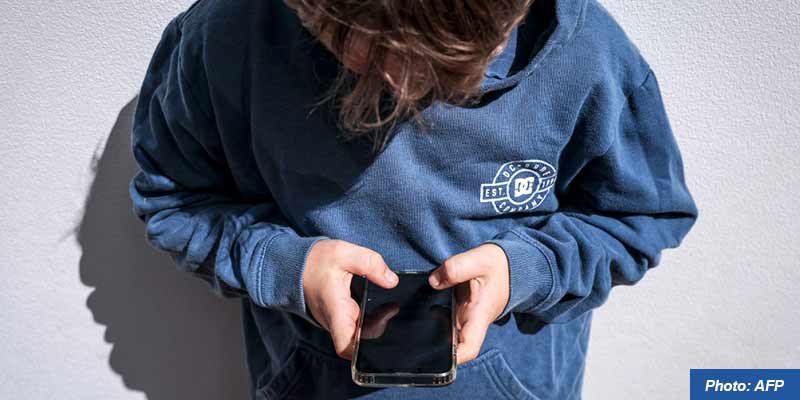
• British Prime Minister Keir Starmer announced that social media app access will be banned for all children under the age of 16.
• In an address from 10, Downing Street in London, Starmer said it was the right choice both as Prime Minister and as a father of young children.
• The announcement follows one of the biggest national conversations held by this government, with more than 116,000 responses submitted by parents, children and experts across the country.
• The responses showed overwhelming public backing for tougher action. As many as nine in 10 parents said they would support a social media ban for children under-16.
• The majority of young people also backed action, with two-thirds agreeing that children younger than 16 should not be allowed to use at least some social media platforms.
• The government plans to use the same model for a social media ban as Australia.
• This would capture user-to-user platforms, whose purpose is to enable social interaction and which allow users to post material, alongside algorithms.
• The ban will therefore include platforms like Snapchat, TikTok, YouTube, Instagram, Facebook and X.
• Messaging services like WhatsApp and Signal are not included in the social media ban.
• In a move to protect children online and address the scale of the challenge, the government will also go further than a blanket ban on social media with blocking functions such as livestreaming and stranger communication with children for under-16s.
• These restrictions will apply to a wider range of online services, including on gaming sites.
• The government will also be looking in more detail at overnight curfews and breaks in infinite scrolling for under-18-year-olds and will set out more detail in July.
• The government will also learn the lessons from Australia’s experience by introducing more highly effective age assurance (HEAA) measures to support compliance, making it far harder for children to bypass safeguards.
• With less time for scrolling and more time for play, it will set a new normal for future generations, kickstarting a cultural shift and driving forward the government’s fight to give every child the best start in life.
What is the scenario in other countries?
• The Australian government passed a law called the Online Safety Amendment (Social Media Minimum Age) Bill 2024 on November 28, 2024. This law introduces a mandatory minimum age of 16 for accounts on certain social media platforms. It came into effect on December 10, 2025, and parents cannot give their consent to let under-16s use these platforms.
• In January 2026, France’s National Assembly approved legislation to ban children under 15 from social media amid growing concerns about online bullying and mental health risks. The Bill needs to pass through the Senate before a final vote in the lower house.
• In Germany, minors aged 13 to 16 are allowed to use social media only if their parents provide consent.
• China has implemented a ‘fatigue system’ for gaming that restricts online gaming time (just one hour per day on weekends and holidays) and penalises overuse, enforced through real-name registration systems.
• In Italy, children under the age of 14 need parental consent to sign up for social media accounts, while no consent is required above that age.
• Denmark said it would ban social media for children under 15, while parents could provide access to certain platforms to kids down to the age of 13.
• The Norwegian government in 2024 proposed raising the age at which children can consent to the terms required to use social media to 15 from 13, although parents would still be permitted to sign off on their behalf if they are under the age limit. The government has also begun work on legislation to set an absolute minimum age limit of 15 for social media use.
• Poland’s ruling party is preparing new legislation to ban social media for children under 15 years of age and to hold platforms responsible for age verification.
• South Korea introduced the ‘Shutdown or Cinderella law’ in 2011, restricting minors from accessing gaming websites after midnight. This policy, grounded in the Game Industry Promotion Act, was later repealed in 2021 in favour of parental control models.
• Singapore has taken a community-based approach through its Media Literacy Council, which promotes responsible digital citizenship and cyber wellness across schools and public platforms.
• Turkey’s Parliament on April 24 passed legislation banning the use of social media by children under 15 and introducing new rules for digital platforms, including game software companies.
• Many countries are restricting student smartphone use through classroom bans, school-wide limits, or curfews to curb distractions and protect student well-being.
Additional Read:
Should India consider age-based access to online platforms?
The government’s Economic Survey said age-based access to online platforms should be considered while also cutting down online teaching to avoid digital addiction. With near-universal mobile/internet use among 15-29 year-olds, access is no longer the binding constraint.