
- World
- Sep 03
World set to cross 1.5°C global warming, warns UNEP
• Global temperature rise is set to cross 1.5°C, likely within the next few years, pushing climate risks and impacts to increasingly dangerous heights, according to a new UN Environment Programme (UNEP) report.
• The report, ‘Limiting Overshoot’, identifies an ‘overshoot, peak, and decline’ pathway as the best remaining option to minimise the magnitude and duration of this overshoot and try to return to below 1.5°C as soon as possible.
Devastating impacts
• While the international community has made progress on climate change, global action to cut greenhouse gas emissions has not been fast enough to avoid global warming crossing 1.5°C above pre-industrial levels in the next few years.
• Exceedance of 1.5°C should not be interpreted as safe or acceptable.
• Above 1.5°C, risks and impacts will intensify with every extra fraction of a degree and every year.
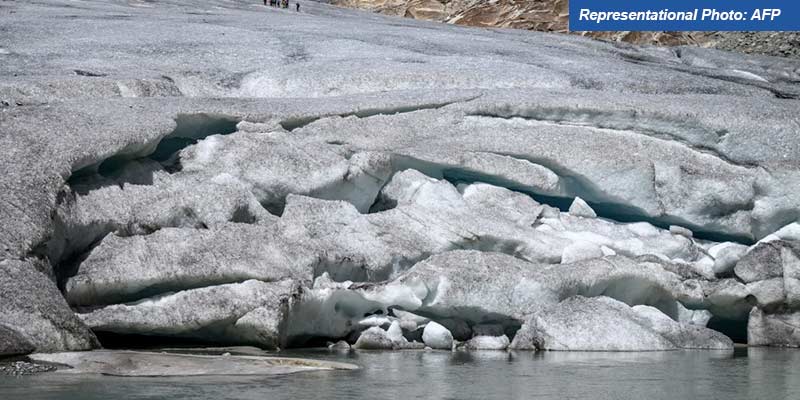
• Risks and impacts include faster sea-level rise, a higher likelihood of collapse of ecosystems such as coral reefs, more extreme heat and wildfires, and profound changes to the cryosphere (ice sheets, sea ice, glaciers, permafrost and snow).
• There is also a higher risk of irreversible tipping points to global systems.
These include:
i) The destabilisation of major ice sheets, such as the West Antarctic and Greenland ice sheets.
ii) Disruption of the Atlantic Meridional Overturning Circulation (the system of currents that moves warm surface water north and cold deep water south, playing a key role in regulating the climate).
iii) Degradation of the Amazon rainforest due to changes in species distribution and dynamics.
• Anticipated impacts include intensified extreme weather, ecosystem loss, and submersion of Small Island Developing States and low-lying coastal cities.
• Severe damage to human health, food security, water supplies, nature, cities, infrastructure, and economies is expected.
‘Overshoot, peak, and decline’ pathway
• Pathway concepts range from sets of quantitative and qualitative scenarios or narratives of potential futures to solution-oriented decision-making processes to achieve desirable societal goals.
• Overshoot refers to exceedance of a specified global warming level.
• With unprecedented action it is possible to minimise and adapt to the impacts of exceedance and return to 1.5°C — which would keep options open to protect the poor and vulnerable, minimise harm to infrastructure and livelihoods, and support people and nature.
• To do so, the world must get onto an ‘overshoot, peak and decline’ pathway that holds temperature rise to the lowest level possible, then brings it down by the end of the century, all while taking adaptation actions that reduce vulnerability to the current or expected impacts of climate change.
What measures need to be done?
• To navigate an overshoot, peak and decline pathway, the world must adopt proactive approaches that deploy flexible, multi-level governance, particularly when it comes to adaptation.
• Strong political will and multilateralism, effective policies, inclusive governance, and finance are all important enabling conditions for action – and equity and justice must underpin all responses.
• Countries with greater responsibility for climate change should act the fastest with the greatest ambition.
• Mitigation and adaptation, which are mutually reinforcing, must advance together, while being responsive to emerging risks.
• Adaptation set up now forms the foundation for efforts to come, but it must become transformational and responsive to evolving non-linear and abruptly arising risks – including those that will harm mitigation efforts.
• Carefully governed Carbon Dioxide Removal (CDR) — the process of removing carbon from the air and storing it through afforestation or other means — is an essential part of the mix.
Carbon Dioxide Removal (CDR)
• Conventional and novel Carbon Dioxide Removal (CDR) will be needed in addition to, not instead of, sustained reductions in residual greenhouse gas emissions.
• However, CDR methods come with risks and tradeoffs that could limit their potential — calling for strong governance frameworks that ensure responsible and appropriate deployment of CDR.
CDR comes in two forms:
i) Conventional, such as afforestation and ecosystem restoration.
ii) Novel, such as bioenergy combined with carbon capture and storage, and direct air carbon capture and storage.
• However, CDR can only contribute credibly to a return to below 1.5°C within the 21st century if peak warming remains well below 2°C and all remaining emissions of CO2, methane and other greenhouse gases are reduced.
• Beyond around 1.8°C, decline to 1.5°C during the 21st century becomes increasingly challenging.
• It would take over 100 years of afforestation and forest management at the current scale, and zero residual CO2 emissions, to bring warming back by 0.1°C.
• Meanwhile, the temperature reduction achievable through novel CDR that relies on geological carbon storage is also constrained.
• Just maintaining net-zero CO2 emissions could exhaust current estimated storage capacity in sedimentary basins by 2200.
• While rapid upscaling of CDR is critical, alongside urgent and accelerated emission reductions, strong governance frameworks on CDR are needed to manage implications for equity, scale and uptake — and to provide guardrails for the exploration of new and uncertain technologies
that could have unintended negative consequences.
• Overall, even optimistic CDR scaling is unlikely to deliver a temperature reversal beyond a few tenths of a degree this century.