
- World
- Nov 10
2026 set to be one of four warmest years on record, says WMO
• The year 2026 will be one of the four warmest years on record, with the global average temperature for January-September 2026 touching 1.47°C higher than pre-industrial times (the average of the 1850-1900 period), according to World Meteorological Organisation’s (WMO) State of the Climate Update 2026.
• This figure is likely to rise through the end of the year because of the warming effect of El Nino, which has been intensifying since August and is expected to be the strongest on record by December.
Highlights of the report:
Earth’s energy imbalance: The imbalance reached its highest level since monitoring began, as greenhouse gases trap unprecedented amounts of heat and upset the equilibrium between incoming energy from the sun and outgoing energy.
Ocean heat content: Ocean warming provides one of clearest signals that the Earth’s energy is currently out of balance, as over 90 per cent of that energy goes into warming the ocean. Ocean heat content in the upper 2,000 m of the ocean in 2025 was the highest in the observed record.
Global mean sea level: Global mean sea level has continued to increase in 2026, and June, July and August 2026 saw the highest values since the beginning of the satellite altimetry era in 1993.
Greenhouse gas concentrations: Concentrations of the three key greenhouse gases in the atmosphere — carbon dioxide (CO2), methane (CH4) and nitrous oxide (N2O) — reached record-high observed levels in 2025, the most recent year for which there are global consolidated figures.
Glacial retreat: Earth’s glaciers lost over 400 giga tonnes during the hydrological year 2025, the fourth consecutive year in which all 19 glacierised regions around the world experienced mass loss. The rate of glacier mass loss for the year was most extreme in Western Canada and the USA, Iceland, and Central Europe.
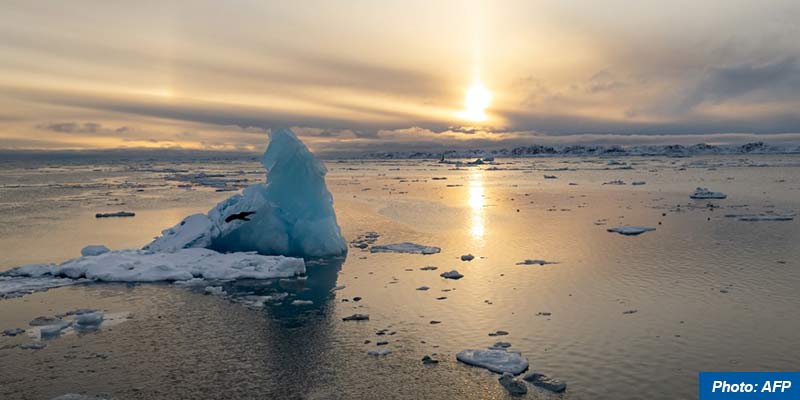
Sea ice: In 2026, Antarctic sea ice reached its third-lowest annual maximum on record (in the satellite era since 1979), while the Arctic maximum was the lowest or second lowest. Sea ice plays an important role in the global climate system and polar ecosystems.
Freshwater: Water stored on land (in groundwater, soil, rivers, reservoirs, glaciers and snow) has declined globally since 2014. In 2025, about 42 per cent of the assessed global area had below-normal terrestrial water storage, compared to the long-term average of 25 per cent.
Extreme events: Extreme events impacted lives and livelihoods, undermined food security, deepened poverty and contributed to displacement across multiple regions. The European heatwaves, drought and wildfires led to more than 30,000 excess deaths, according to preliminary estimates, with national temperature records in at least eight countries, and major impacts on agriculture, energy and transport. An estimated 146.5 million people in India were exposed to extreme heat in an April 2026 heatwave. The Himalayan glacier collapse and catastrophic downstream flash flood in late August killed more than 1,300 people and had a massive impact on Nepal’s economy. Tropical cyclones caused devastation and loss of life in many countries.