
- World
- Nov 23
COP31 climate summit ends without a pact
• The 31st UN Climate Change Conference (COP31) in Antalya, Turkey, ended on November 22 without a final deal.
• The negotiators failed to overcome divisions over fossil fuels, bringing two weeks of talks and two days of overtime to a close.
• UN Secretary-General Antonio Guterres described it as a “deeply disappointing” setback.
• The failure to reach a consensus on the final agreement at COP31 comes at a time when the global temperature rise is set to exceed 1.5°C above pre-industrial levels.
What is COP31?
• The United Nations Framework Convention on Climate Change (UNFCCC) is a multilateral treaty adopted in 1992, shortly after the first assessment report by the Intergovernmental Panel on Climate Change (IPCC) in 1990, to stabilise greenhouse gas concentrations at a level that would prevent dangerous anthropogenic (human-induced) interference with the climate system.
• Since entering into force in 1994, the UNFCCC has provided the basis for international climate negotiations, including landmark agreements such as the Kyoto Protocol (1997) and the Paris Agreement (2015).
• The Conference of the Parties (COP) is the main decision-making body of the UNFCCC.
• UN Climate Change Conferences (or COPs) take place every year, and are the world’s only multilateral decision-making forum on climate change that brings together almost every country on Earth.
• The COP is where the world comes together to agree on the actions to address the climate crisis, such as limiting the global temperature rise to 1.5°C, helping vulnerable communities adapt to the effects of climate change, and achieving net-zero emissions by 2050.
• The inaugural COP gathering took place in Berlin, Germany, in March 1995, and today the COP secretariat is headquartered in Bonn.
• The host country of the COP normally rotates among the five United Nations regional groups (Africa, Asia-Pacific, Eastern Europe, Latin American and the Caribbean, and Western European and Others), with regional group members determining which country from their region will make an offer to host the conference.
• COP30 was held in Brazil’s Belem in November 2025.
Why countries failed to reach a deal at COP31?
• A group of countries from Europe, Africa, Latin America and the Pacific challenged the proposed COP31 agreement, demanding explicit action on fossil fuels and stronger climate finance.
• Countries that do not usually negotiate together stood side by side with a message for the COP31 Presidency: the agreement on the table is not good enough.
• Led by France and Panama, ministers and representatives from across the world including Belgium, Ivory Coast, Finland, Greece, Guatemala, Spain, Sweden and Vanuatu, joined forces to demand stronger climate action.
• The inconclusive talks followed days of deadlock over fossil fuels, with negotiators unable to bridge differences between a coalition of climate-vulnerable nations and countries pushing for a stronger commitment to move away from coal, oil and gas, and those seeking to protect economies heavily dependent on fossil fuel exports.
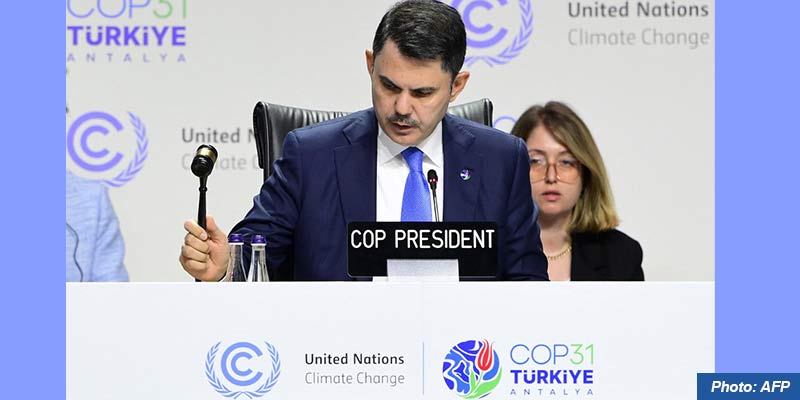
• Multiple compromise drafts circulated by COP31 co-presidents Australia and Turkey sought to win consensus, including by acknowledging that global warming is now on course to exceed the 1.5°C threshold while calling for expanded carbon-removal technologies.
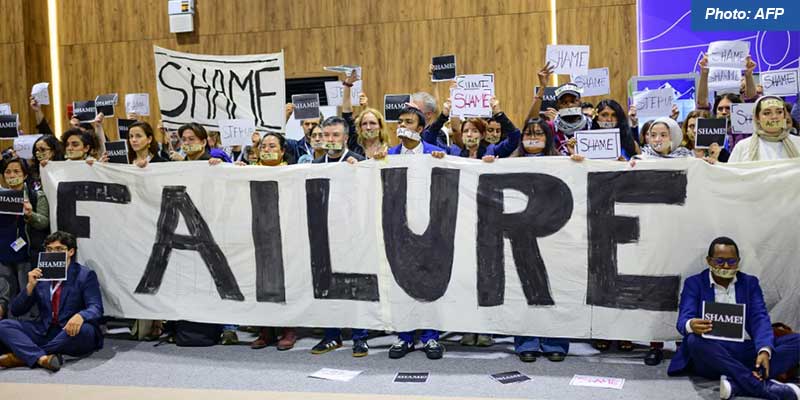
• But the effort ultimately failed, with critics arguing the text weakened previous commitments and fell far short of the action required to address the climate crisis.
• UN chief Guterres expressed deep disappointment, sharing the frustration of those who expected governments to rise to the moment the climate crisis demands.
• However, he stressed, the lack of agreement does not change the facts or the urgency of the challenge.
• With the world heading toward an overshoot of the 1.5°C global warming limit, he stressed the need to keep overshoot as short and shallow as possible.
• He called on countries to accelerate a just transition away from fossil fuels, deliver deep and rapid emissions cuts, increase climate finance and strengthen protection for frontline communities.
What next?
Focus now shifts to COP32 in Addis Ababa, Ethiopia, where governments will face many of the questions left unanswered in Antalya, from the transition away from fossil fuels to mobilising climate finance for developing countries.