
- India
- Aug 14
- Sreesha V.M
Parliament passes 12 Bills during Monsoon Session
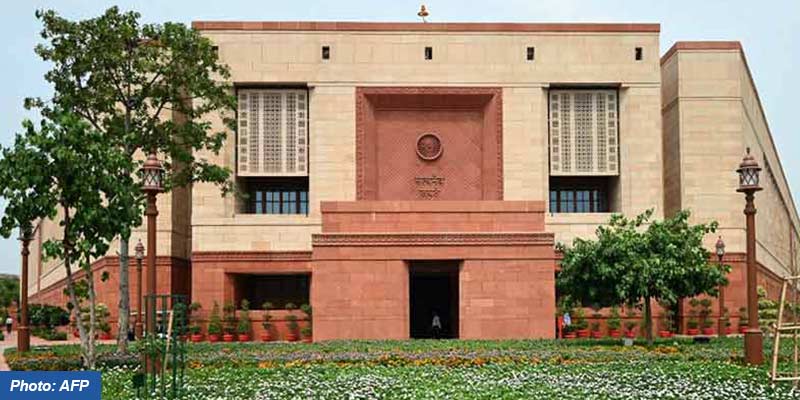
• The Monsoon Session of Parliament, which commenced on July 20, was adjourned sine die on August 13.
• The Session provided 19 sittings spread over a period of 25 days.
• While Lok Sabha recorded 19 per cent business, it was 39 per cent in Rajya Sabha.
• During the Session, 12 Bills were passed by both Houses.
Brief look at the Bills passed in Parliament:
1) The Prevention of Insults to National Honour (Amendment) Bill, 2026: It amends Section 3 of the Prevention of Insults to National Honour Act, 1971. It extends the same legal protection to the National Song ‘Vande Mataram’ that is currently afforded to the National Anthem ‘Jana Gana Mana’. The amendment makes it an offence to intentionally prevent the singing of the National Song or to cause a disturbance to an assembly engaged in its singing.
2) The Public Examinations (Prevention of Unfair Means) Amendment Bill, 2026: The Public Examinations (Prevention of Unfair Means) Act, 2024, enacted on February 12, 2024 provides a comprehensive national legal framework to prevent unfair means in public examinations. The proposed amendments are expected to further strengthen the legal framework for preventing examination-related malpractices, including question paper leakages, impersonation and organised cheating, while ensuring swift investigation, speedy trial and timely disposal of appeals.
3) The Registration of Births and Deaths (Amendment) Bill, 2026: It seeks to amend the Registration of Births and Deaths Act, 1969 to make provisions for delayed registration of births and deaths more stringent by prescribing a streamlined verification mechanism. The Bill provides for registration after one year and up to two years only with the approval of the competent Executive Magistrate, and after two years only with the approval of a Judicial Magistrate of the First Class.
4) The Supreme Court (Number of Judges) Amendment Bill, 2026: It seeks to replace the Supreme Court (Number of Judges) Amendment Ordinance, 2026 to increase the number of judges in the Supreme Court from present 33 to 37, excluding the Chief Justice of India.
5) The Appropriation Bill, 2026: Demands for Excess Grants for the year 2022-23 were taken up and the related Appropriation Bill was introduced. This Bill was introduced in pursuance of Article 114(1) of the Constitution of India, read with Article 115 thereof, to provide for the appropriation out of the Consolidated Fund of India of the moneys required to meet the expenditure incurred in excess of the grants made by the Lok Sabha for expenditure of the central government, for the financial year ended on March 31, 2023.
6) The Micro, Small and Medium Enterprises Development (Amendment) Bill, 2026: It updates the MSMED Act, 2006 to align its provisions with the requirements of the MSME sector. The amendments seek to reduce payment-related constraints, make dispute resolution more time-bound and simplify compliance. Their broader objective is to facilitate the growth, development and competitiveness of MSMEs while promoting Ease of Doing Business.
7) The Bankers’ Books Evidence Bill, 2026: The Bankers’ Books Evidence Act, 1891 was enacted to facilitate the use of certified copies of bank records as evidence in legal proceedings without requiring production of the original records. The Act was enacted at a time when banking records were predominantly maintained in physical form. The amendment Bill expands the scope of the definition of “bankers’ books” to include all forms of records maintained by banks, whether in physical, electronic, digital, virtual, cloud-based or in any other form.
8) The Taxation and Other Laws (Amendment) Bill, 2026: The Income-tax Act, 2025 was enacted to consolidate and amend the law relating to income-tax, which came into force on April 1, 2026. The Income-tax (Amendment) Ordinance, 2026 was promulgated on June 5 with the objective of mitigating the impact of external economic shocks, ensuring stability in the domestic economy and supporting key sectors affected by the prevailing global conditions by amending certain provisions of the Act. The Bill was passed to replace the ordinance.
9) The Kerala (Alteration of Name) Bill, 2026: It provides for alteration of name of state of Kerala to Keralam and contains necessary amendments to the provisions of the Constitution and also consequential provisions.
10) The National Cooperative Development Corporation (Amendment) Bill, 2026: The NCDC, a statutory organisation under the Ministry of Cooperation, was established in 1963 under the National Cooperative Development Corporation Act, 1962. The Bill seeks to expand the definition of “foodstuffs” to include any other food items as may be notified by the central government, remove the geographical restriction applicable to industrial goods, strengthen the cooperative sector by updating statutory references, removing obsolete provisions, and empowering the NCDC with necessary incidental powers. These measures will facilitate the collection and sharing of credit and other relevant information with authorized institutions, while providing greater flexibility, legal clarity and operational efficiency and enable timely, direct and responsive financial assistance for co-operative development.
11) The Tribunals Reforms Bill, 2026: The Tribunals Reforms (Rationalisation and Conditions of Service) Ordinance, 2021 was promulgated on April 4, 2021, which was replaced by the Tribunals Reforms Act, 2021. The Act stipulated the procedure for selection and appointment of chairpersons and members of various tribunals and provided for their uniform terms and conditions of service. The Supreme Court struck down certain provisions of the Act. Tribunals Reforms Bill, 2026 provides for the establishment of the National Tribunals Commission, the qualifications, manner of selection, appointment, salaries and allowances, resignation, removal and other conditions of service of the chairpersons and members of various tribunals specified in the First Schedule to the Bill. It is also proposed to make necessary consequential amendments in the related enactments governing various tribunals.
12) The Mines and Minerals (Development and Regulation) Amendment Bill, 2026: In India, mining is governed by the Mines and Minerals (Development and Regulation) Act, 1957. For the wider public interest, the Union controls mine regulation and mineral development under Section 2 of the Act. The Mines and Minerals (Development and Regulation) Amendment Bill, 2026 introduces changes in this Act to create a uniform and balanced fiscal framework for the mineral sector nationwide. It restricts state governments from imposing any new taxes on mineral rights and mineral-bearing lands without conditions/restrictions prescribed by the central government.
(The author is a trainer for Civil Services aspirants.)